Showing posts with label WSK. Show all posts

Monday, January 9, 2012

[WSK 5th] Korea as a Good Model of Women Policy


As the number of Korean women who entered the main stream of society increases, other countries in Asia started to have interest in women policy of Korea. Recently, there was a meaningful workshop where the other Asian countries can learn about Korean policy on women. Let’s take a look.

Gathering to Learn Korean Language
30 people including Cambodian and Indonesian government officials and Ngo members attended workshop on Capacity Building for Women's Policy sponsored by Korean Women's Development Institute to learn women policy from Sept. 18th to Oct.1st. They participated at lectures, discussions and site visit under the three themes on capacity building on; policy, economy, women rights and violence.
The Buddhist country, Cambodia and the Muslim country, Indonesia have different cultural background, however, since 2000s they are actively working on the policy on gender equality. But women's social status is still low due to the poverty, poor education, and conventional man chauvinism. What were the impressions that the experts from these two countries got from Korea?

for justice democracy are speakers today.this is the first time  to korea for both of them and they were very impressed by women's liberation movement history and women's policy.mukti apprciated hospitality saying"it is the first time for me to be herebut seoul is wellknown city in indonesia.korea is emerging as an economic superpower in the world.i'm looking forward to be here".pakpahan was interested in korean women's policy and she said korea abolished the head of the family system and korean women's liberation movements are even if it is a small result.


What is the Most Important Issue in Women’s policy in Tow Countries?
 Mukti: “As Malaysia and Indonesia share the same language and religion, Indonesians are very popular in Malaysian labor market. Currently, about 1.2million are working in Malaysia. However, since the exploitation and fraud got worse, Indonesian government banned the export of labor force until the Malaysian government guarantees of proper working conditions.”
Pakpahan: “The biggest issues among Indonesian women are health, finance and education. Indonesia has the highest maternal mortality rate in Southeast Asia, which is very urgent matter to be fixed. Most of women are working as maids in Indonesia or in other countries. Their working conditions and payments are very poor because the domestic law cannot protect them. It was all resulted from the gender inequality in education. While the percentage of the female students in primary school is quite high, in higher educational institutions the percentage gets pretty low.”


Bring Know-how to Their Countries
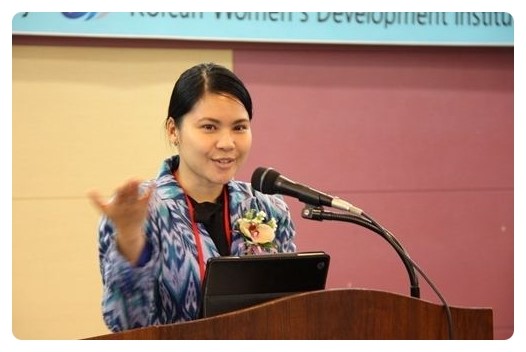
(Source: Korean Women’s Development Institute)

Mukti: “In Indonesia we also do the research on women but most of them depends on Ngos or university laboratories, so we need a professional institutes managed by the government. The most impressive thing of Korea was the statistics of adult magazines. When I go back to Indonesia I’ll strongly suggest the same one to the senate.”

Pakpahan: “I agree with the importance of the statistics and want to develop many indicators to apply to the policies for women. Also when I visited to one of the Korean Women's Hotline center, I got an idea about establishing the one-stop service centers that connects the sexual violence victims to consultants for supporting. I will suggest it when going back.”

There is an expression like this, “The women-friendly country is indeed a developed country.” Now, Korea is becoming a good model of high techniques and advanced policies. A good and comfortable society is not built by a specific person but by every single one of us. Isn't it the first step of world peace to make the weak including women happy?

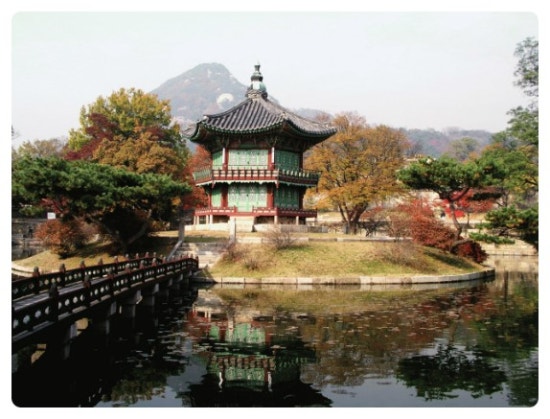
[WSK 5th] Accessories for Women in Joseon Dynasty Era

People want to have a better look and show off their charms by wearing new clothes and trying a new hairstyle. Well, there is nothing like accessories to complete the ‘better’ look. Every decorative itemsitem, such as hats and mufflers, can be called accessories.
Today, we will go through the favorite accessories of Korean women in the Joseon Dynasty era. Hair ornaments, bracelets, rings and necklaces. They wore different ornaments by season, occasion and age. In addition, each accessory has its own story. For example, when family gets separated, they share each ring from a pair of rings, garakji. When husband died early, wife buried a ring of the pair with him and she kept the other to commemorate him. For that reason, garakji used to be made as a pair and actually bigger than present one.
Let’s take a look at the accessories of women in the Joseon Dynasty era.


Earring: The Symbol of Class

Rings were the first ornament in history. In certain countries of Asia, people considered it like a charm and kept it very carefully. They were also called eesik, eedang or eehwan. Many gold crowns and delicately made-ornaments were excavated from many graves of the Three Kingdoms period. We can guess the metalwork technique of the era was very sophisticated and detailed. There are three types of earrings; simple, dangling and showy. The earrings of old times were made of gold, silver and bronze, but unfortunately the number of the earrings from Goryeo dynasty are very few.


Did you know that men used to put on earrings in the past? The typical example is Hwarang in the Silla kingdom. They used to wear earrings as a symbol of youth and ability. According to the Annals of the Joseon dynasty, prince Yangpyeong put on big earrings when he was nine (in 1513) and it was common for prince to put on earrings back then. However, the earrings became unpopular since the Confucianism pervaded the whole country in the Joseon Dynasty era. Even the King Seonjo officially announced that it is the most undutiful thing to put on earrings because piercing is hurting the ancestrally inherited body. According to some recent studies on the era, scholars insist that the regulation was resulted from the economic crisis caused by importing too much gold and silver for earrings from China. 
Eventually, the men’s earrings were disappeared after King Seonjo era and women only put on earrings in wedding ceremony. For this reasons, the design of the earrings in Joseon dynasty became very simple.


Garakji: A Pair of Rings of Engagement

Garakji means a pair of big rings. It was also called “Jihwan”. Garakji appeared from the Joseon Dynasty era. It was only for married women. If a woman put on only one ring in her finger, it means she was a single. Only married women could put on a pair of rings, which means harmony with her husband. The idea came from the Confucianism


The history of exchanging rings went back 4800 years ago. In 16th century, the Tudor dynasty believed that the blood vessel of the 4th finger of left hand is connected to heart, and they put on wedding ring on 4th finger. Since then, it became customary in most countries. 
Garakji was mainly made of gold and silver but other materials were also used, such as lacquer, jade, quartz, green jadeite, amber, pearl, and copper. 
In Joseon dynasty, noblewomen and royal family put on different materials of rings by season and occasion. Gold rings from Oct. to Jan., silver lacquer rings from Feb. to Apr., jade or quartz rings were for Dano festival and regular lacquer rings were from dog days, boknal, to Sep. All of them were for having a natural and harmonious look, which are influenced by the formality of clothing and four seasons.
Garakji was not only a love token but loyalty to the country as well. During Japanese invasion of 1592, a gisaeng, cultured women entertainers in the Joseon Dynasty era, called Nongae, hugged Japanese general and jumped down to the river, wearing 10 rings. Jinjoo local government designated Aug. 8th as the “Nongae Day” and has hosted many special events and donated hundreds of silver rings engraved "euiam", which is the name of the rock she stepped on before jumping into the river, to supporting center.


Norigae: Accessory for Every Class


Norigae is a perfect accessory for women’s Hanbok. It is widely loved by all classes, from royal family to common people. Norigae was the most popular ornament during the Joseon Dynasty era, while the other accessories like necklaces and earrings became unpopular. 
There is no historical record on norigae. For your information, the Hanbok during the Silla kingdom and the Goryeo dynasty era doesn’t look like the one in these days. Instead of norigae, it was customary to hang pocket filled with gold bell or scent in the belt. Later in Joseon, they were replaced into the new born accessory, norigae. During the era, norigae was hung in the breast-tie of Hanbok. People wore more gorgeous norigae for royal functions and big festivities. Noblewomen used to inherit it to generation after generation.
Norigae is consisted of ttidon, string, but also paemul(jewel), knot and sool(tassel). Ttidon is a tie to connect jewels and it is supposed to be hung in the breast-tie. Gold, silver, white jade, green jadeite and coral were used to make norigae. There are square, rectangular, round, flower and butterfly shaped ttidon. According to the number of jewels of it, it was called oijul-norigae or danjak-norigae(single jewel) and samjak-norigae(three jewel). 
Red, blue, yellow, pink, green, light purple and deep purple colors were used to make sool(tassels). Besides, some of norigaes were embroidered with a rhino horn, lotus flower, and herb that was belived to bring an eternal youth. Norigae represented not only the social status but also the wishes of women and ideologies for abundance, longevity and good luck.


Binyeo: A Traditional Hairpin for fixing ladies’ chignons

Binyeo is an ornamental hairpin used to hold a hair bun in place. We can still see old ladies wearing binyeo in countryside. Binyeo is classified into two kinds; a Jam and a Chae. Jam is a normal stick-shaped binyeo and Chae is a tong-shaped binyeo with decorations. Binyeo was allowed only for married women. The jewels, woods, animal horns and bones were used to make binyeos.


Thursday, December 8, 2011

[WSK 5th] Events in December

1. Special Exhibition of First Edition Tripitaka Koreana, hosted by Cultural Heritage Administration 
http://www.gogung.go.kr/community/notice_view.jsp?sGbi_gbg_id=ID005&iGbi_gbg_seq=1&iGbi_seq=2986&page=1  

- Period : 15 Nov(Tue) ~ 18 Dec(Sun), 2011
- Venue : Exhibition Hall, 2nd Floor, National Palace Museum of Korea, Seoul 

2. Boseon Green Tea Plantation and Light Festival 

http://www.boseong.go.kr/ko/culture/events/light_festival/01info.html

Lighting Ceremony, Celebratory Performance, Fireworks, A large tree decorated with lights, Photo zone, Milky Way Tunnel, Street of lights in green tea field 

- Period : 9 Dec(Fri), 2011~ 29 Jan(Sun), 2012
- Venue : Dahyanggak observatory and Botjaedawon, Hoecheon-myeon, Boseong-eup, Boseong-gun, Jeollanam-do 

* Lighting Ceremony : 17:30, 9 Dec(Fri), 2011. Dahyanggak Pavilion, Observatory area 

[WSK 5th] To The King's Garden


The world praises the beauty of Versailles garden. By the way, do you know that Korea also has a beautiful royal garden which will fascinate everyone in the world?


> (Source: Korea Tourism Organization)

Royal garden is not well-known even though it is truly beautiful. What is the reason? Is it because the garden was a forbidden place which only allowed King and Queen? Royal garden is believed to be the best of Asia. Let’s take a closer look at gardens in Royal palace.


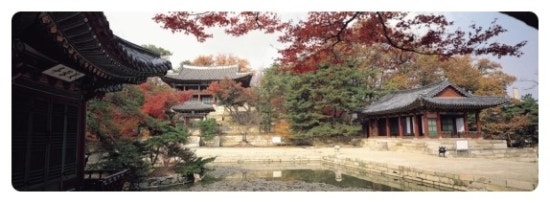
The Garden of Changdeok Palace, Hidden Beauty of Joseon’s Gardens 

Huwon, the backyard garden of Changdeok palace, is a model of garden culture of Joseon dynasty. Considered the best garden in Joseon and harmonized with nature, Huwon has a fundamental frame of Asian garden style and a variety of plants and spring water. It is simply the best garden of Korea.
Changdeok palace is located in natural hillside of 198,000 square meters and that nature of garden is more beautiful. Huwon is built by Yin-Yang element theory. Called northern garden or forbidden garden, Huwon starts from the hill of Kajeongdang.


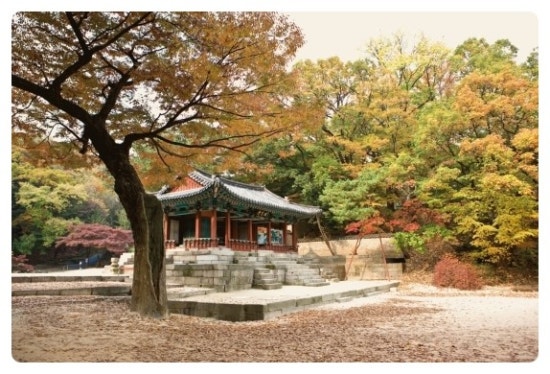
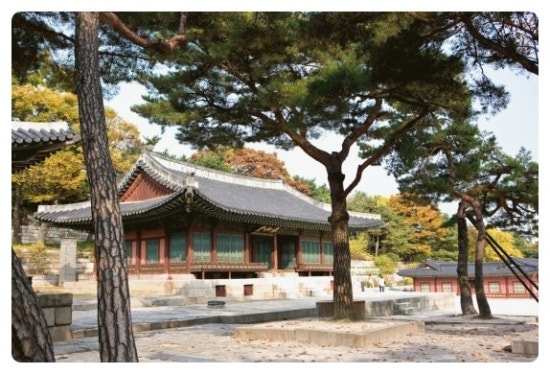
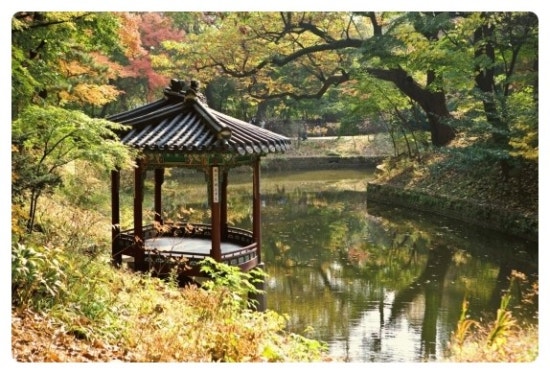
< Autumn of Buyongjeong, Garden of Changdeok palace > (Source: Korea TourismOrganization)

Probably the best known garden in Changdeok palace is Buyongji. In the middle of pond which is 28.4 m wide and 34.5 m long, there is a pine tree. The garden is made by Yin-Yang element theory that says “sky is round and earth is square”. Two pillars of Buyongji are put into water. It is considered as human who sticks to earth and looks at the sky. Yeonghwadang  stands over the altar named Sajeongbigigak in the west and Chundangdae in the east. In addition, Chuhabru is located over five story flower steps in the north. Depending on your angle you could see some changes because each structure has a different size, shape and height.

You will meet forever young gate as you pass by Yeonghwadang. After the gate you will see Aeryeonji which means lotus flower pond. Unlike Buyongji, there is no island in the middle and the pond is surrounded by rocks. It is very unique style that water flows just as waterfall.

Aeryeonjung is a pavilion which was made at 18th year of King Sukjong. Its eave is longer than other structures. In addition, there are carp-shaped roof tiles. This architecture is based upon Yin and Yang element theory that water prevents fire. Each side of pavilion has a floor and windows which make you appreciate the nature.
Natural curve shaped Banwolji is very beautiful. There are Kwanram pavilion and Seungjae pavilion near Banwolji. When you cross the stone bridge, you will meet Chondeok pavilion. The area is surrounded by forest so you may feel comfort.


(Source: Korea TourismOrganization)

You will get to Okryucheon stream as you take a walk over the northern hillside. The stream meets with Changkyung palace. There is spring water called Eojeon which is above Soyo pavilion. Underneath, the spring water rotates and creates a beautiful nature. Okrucheon site is very deep inside in the palace. You may feel pure nature that includes the human arts.

You may wonder if there are any secrets in the Asian garden which is hidden behind those huge and tall buildings.


Hyangwonji and Hyangwonjeong, Garden of Gyeongbok Palace

Gyeongbok palace is the major palace which has 390 buildings and 47 gates. Its garden is not as well-known as garden of Changdeok palace because it is located outside of the palace. It is fair to say that Mt.Bukhan is a garden of Gyeongbok palace which ismore natural and spectacular.


 (Source: Korea Tourism Organization)

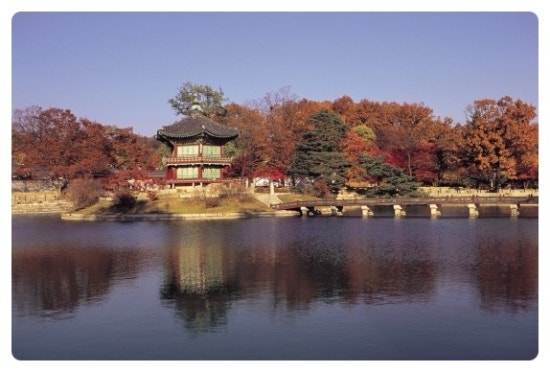
Gardens of Gyeongbok palace refer to Hyangwonji site and Amisan site. Hyangwonji is made in the south of Geoncheong palace, which is a pond of 460 square meters. You will find lotus, water plants and carp. There are many trees by the pond such as zelkova, locust, maple, hawthorn, willow, elm and pine trees. Hyangwonji water flows into a pond of Gyeongho pavilion.

There is a round island and Hyangwon pavilion in the middle of Hyangwonji. Hyangwon means the fragrance flying over the sky. Azazlea and maple trees are planted by the pond. The bridge to pavilion is Chihyanggyo meaning amazed at scents. Chihyanggyo is the longest bridge at ponds during Joseon dynasty as a wooden bridge. The bridge was originally located in the north near Geoncheong palace but it is in the south now. 

This site is easily found in many of calendars or photo galleries. You can find beautiful scenery when mountain, pavilion and bridge are reflected into the pond. In addition, Asian beauty will be found through whole year.


(Source: Korea Tourism Organization)

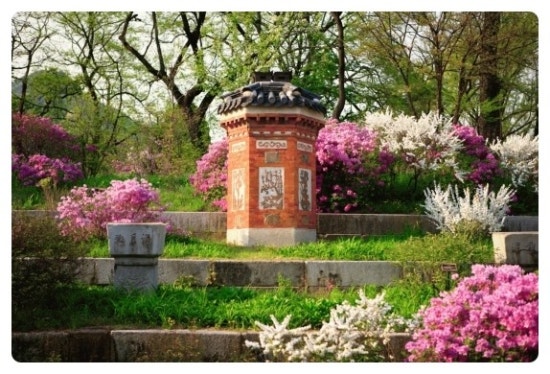
Amisan garden, which is in Gyotaejeon, the chamber of queen, is made for the queens’ spare time. In 1412, King Taejong widened the pond and made Gyeonghoiru for a party for congressmen and diplomats. After digging the soil to make pond, he made Amisan hill garden with that soil. That garden is 55 meters from east to west and 30 meters from north to south. The hill was made and various trees were planted.


Huwon of Changgyoung Palace, A beauty of Traditional Garden

Changkyung palace is not as luxurious as others. Did you know there is a traditional garden? It is near Tongmyeongjeon and Chundangji. The garden is located behind Tongmyeongjeon. When you pass through Hamyang gate, you will get to garden of Changdeok palace.
The garden of Changkyeong palace is in the north. Hillside of Tongmyeongjeon and Yanghwadang is good place for the rest.


<Fall foliage of garden in Tongmyoung pavilion in Changkyeong palace>
(Source: Korea Tourism Organization)

Tongmyeongjeon is a queen’s chamber and well-known as a story of Changhuibin and Queen Inhyeon. It was burnt down and rebuilt several times. There is a pond and arch shaped stone bridge. The pond is surrounded by rocks because spring water spilled over in rainy season. 

Spring water flows as waterfall through water road made of stone. This pond is believed to be beautiful most. When it was first made, water pipe was made of copper. Later it was changed to stone pipe because coppered pipe is lavish.  
When you go deep inside forest after Tongmyeongjeon, you will meet Chundangji with small and big ponds. It was rice paddy but changed to a big pond during Japanese occupancy. We could meet rice paddy of four seasons if it were still rice paddy. This site is well preserved downtown in Seoul so natural monument, love birds visit very often.


(Source: Korea Tourism Organization)

 It is enjoyable to look at the well-managed nature in royal palace garden. However it is more valuable to learn human minds on nature. You will have a glimpse of ascendant’s mind which wants to be harmonized with nature. The garden was a healing place for ruling the country through deep thought and meditation.


Please come to see a beauty of Asian garden made of heaven, earth and human all together. When you are stressed out, come to the garden. The King’s spirit is still alive in the garden. Their spirits which cared so much about their people will refresh your mind.

[WSK 5th} Saemungil Road, Walk through History of Seoul [출처] Saemungil Road, Walk through History of Seoul|작성자 진용


Walking boom in Korea is still hot since the Olle first drew the attention. Once a pretty road is discovered, people get busy in trimming and naming it. There are various roads such as Dulle, Olle, and Nadul. Courses limited to Mt. Jiri and Mt. Bukhan are diversifying to fortress roadside and yellow soil road on barefoot.


(Source: Korea Tourism Organization)

There are some nice road to walk on such as Shinsadong Garosu, Jeongdong, and Samchungdong. However there is a road which is not discovered by many. It is Saemun road. From History museum, Doneuimun to Ganghwamun, you are actually walking on Seoul’s history. Shall we walk? 


Walk on Seoul: Saemun Road 
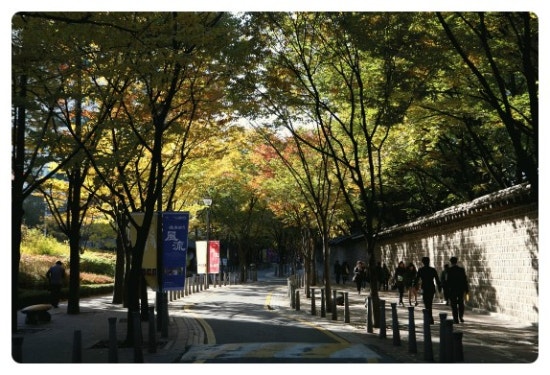
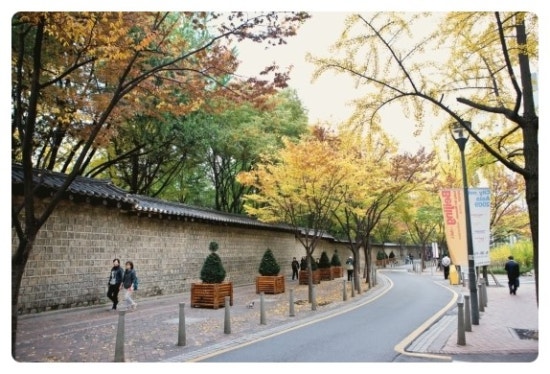
Saemun is very well-known as “museum” road. It is 1.1 km long from the site of Doneuimun to Ganghwamun. When you walk down the most “Seoulish” road, you will feel what it’s like Seoul. Let’s take a step to the historic sites.
Saemun road starts at Seodaemun which is one of four big gates built during the King Teajo’s period. It was called Doneuimun at that time. However it was closed down due to Pungsu theory. Instead, Seojeonmun was built in the south of Gyeonghee palace. Seojeonmun was also dismantled when fortress was newly built and new gate was stood near Seodaemun. It was named Doneuimun.


(Source: Korea Tourism Organization)

While Korea was under the Japanese rule, Japanese government destructed Seodaemun for “so-called” city planning. They called the inside of Seodaemun as Saemunbak and outside as Saemundong and Saemunan. These names were changed into Seodaemun after independence. Once again, a new name “Saemunan” was given in 2007. However, the road we are walking on is both inside and outside of Saemun road, so the road was named as Saemun rather than Saemun’an’, which means ‘inside’.
There are Chungdong road, Gyeonghui palace road and Naesusa road in both side of Saemun road. Saemun road is large and Chungdong road and Gyeongheui palace road are middle size. You may feel antique style of Saemun road which embraces ancient times and modern times of Seoul city.


History Museum tour on Saemungil Road
There are various museums on Saemun road such as Seoul History museum, Police Museum, Salvage army history museum, Agriculture Museum, Apenzeller Memorial Museum, Saemunan church history hall and newspaper museum. Museums are located in the road between Seoul history museum and Deoksu palace. Let’s share Seoul history and have fun together!
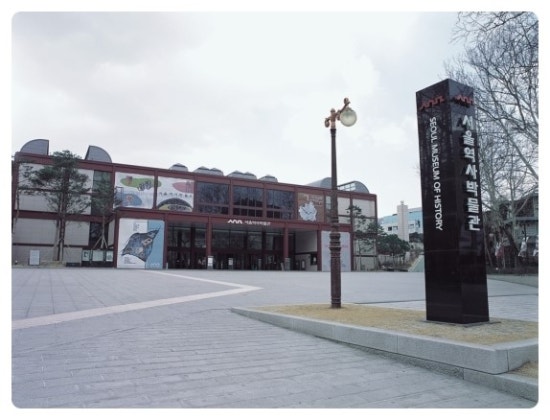
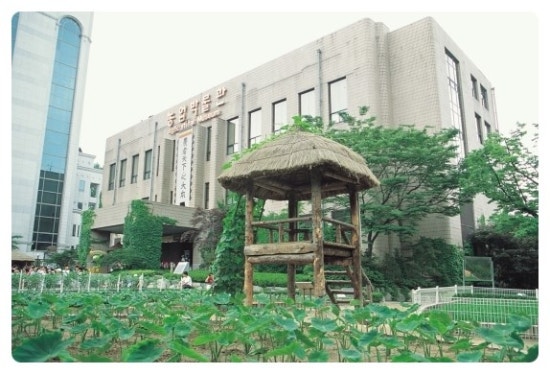
When you get into the center of Saemun road, you will meet a tram which probably ran once upon a time in Seoul. There is Seoul History museum nearby. The museum displays history, culture and landscape from Joseon dynasty up to now. It has a variety of sources and remains of Seoul. The museum officials study, research, collect and preserve the things of Seoul. They provide many programs to help people understand Seoul even better.


(Source: Korea Tourism Organization)

Let’s go to Police museum which has a new concept that visitors would have a chance to be the police. The museum provides visitors with exhibition and events of cultural education.
You will meet Agriculture museum which is firstly built and specialized agriculture museum in Korea. It has more than five thousand sources which were collected over two decades. Two thousand sources are on display. Nonghyup Central Association made the museum to preserve a great deal of agricultural heritage.  


(Source: Korea Tourism Organization)

Now, let’s move to Jungmyeongjeon. Jungmyeongjeon, which means the “light lasts forever”, was built in 1901 as the royal library. It is the first western style structured architecture which was built when Deoksu palace played a role of Gyeongun palace. It was rent to a foreigner in 1915 and used as Seoul Union until 1960s. It was owned by many different persons but finally sold to Cultural Heritage Administrative. Currently it belongs to Deoksu palace since February 2007. 
Let’s go to Apenzeller Memorial Museum. When you go up the hill from Jeongdong Jaeil church to the south, you will find a three-story red brick building, Baejae school. It is small but overwhelming indeed. Baejae school is the first modern education institution in Korea. Baejae was named by King Gojong. It is the only building that still remained, except Deoksu palace. As it is the first “modern” and “private” school, it has lots of sources on education history and modern history of the area. You can experience education history of Korea.


Another Way to the Saemungil Museum Tour
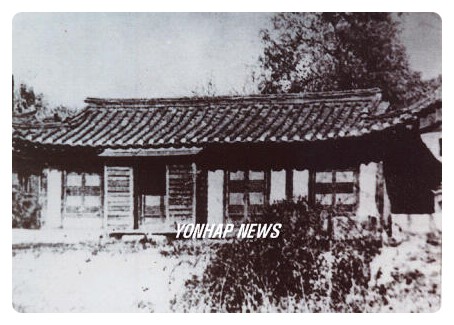
Leaving Seoul history museum, you’ll arrive at History museum of Salvage Army. The museum was one of ten western style buildings in 1920s and located in headquarter of salvage army. There are many sources on Christianity including their mission work. In addition, you can see the office of early age and have a glimpse of life of salvage army in 1930s. The museum displays old documents and bibles used in early age of salvage army.

  
(Source: Yonhap News)

Let’s go to History museum of Saemunan church. The church was first built as a Presbyterian church in 1887 by evangelist Underwood. He had a praying service regularly at his home and later on it became a church. Unlike churches at that time, his church baptized Korean and appointed church elders. It was truly Korean church so Saemunan church is called a mother of Korean church. Church’s history museum was open in 2003 with a great deal of sources about church. A thousand sources consist of documents, photos and remains. 390 sources are on display in museum. Guinness book of records tell that Saemunan church is the first organized church of Korea. The church is not only meaningful to Christians but also valuable to everyone as cultural heritage of Korea because it affected society of modern age in Korea.


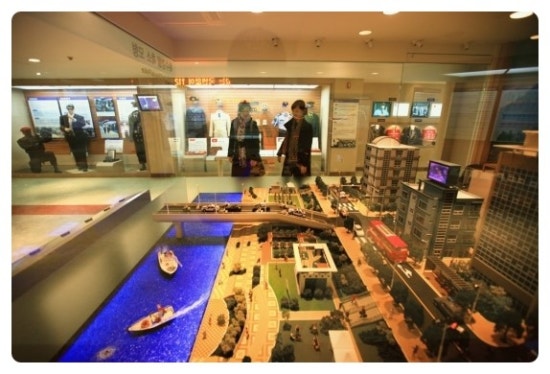
Let’s go to museum of history of monetary system, which is the first museum focused on history of monetary system and opened by Joheung Bank (Present Shinhan Bank) in 1997. You can look through 100 year old history of monetary system. It was year 1997 when commercial bank opened for the first time in Korea. The museum has remains and sources related to monetary system, currency and history of Shinhan Bank. The hall of history of monetary system consists of several sectors helping you look through wave of monetary system such as traditional age, modern age, age of Japanese occupancy and age after liberation. You can see a model of bank of those days.

(Source: Korea Tourism Organization)

Isn’t it quite amazing that there are lots of stories within 1.1 km long road? Saemun road waits for you to come to tell you the modern history of Seoul such as modern history of monetary system, Christianity, education and even today’s matter. After looking around museum, listen to the voice of Seoul history on the road of Saemun.

Friday, November 4, 2011

[WSK 5th] 2011 Makgeolli Expo - Korean Traditional Rice Wine


Makgeolli Expo will be held in COEX next week!

See below for detail information:

http://www.makgeolliexpo.co.kr/ 

- Period : 9 Nov (Wed) ~ 12 Nov (Sat) 2011, 4 Days
- Venue : Hall A,B,C,D COEX, Samseong-dong, Seoul 

But, what is Makgeolli?

Makgeolli is known as Korean wine, the oldest liquor in Korea. It was made starting from long time ago in Korean history. 

I found that this article below (Makgeolli, Rediscovered) is interesting to know about Makgeolli. I have tried few times, only few sips of makgeolli because I was curious about the taste. 

The taste is not so strong, and different compare to soju (another typle of Korean wine). The ones that I tried were in white color, but interestingly nowadays makgeolli is introduced in many colors such as what the article below explained (makgeolli cocktail). Even, people has tried to combine makgeolli with other ingredients such as garlic makgeolli or barley makgeolli.

Since Makgeolli is made from rice, it can match any kind of foods. Korean people would like to eat it with pajeon or meat, but the expert in the article below said that it tasted good with cheese, too!

Curious about Makgeolli?


-----

``Makgeolli,'' a representative Korean traditional wine, may well be the oldest liquor in Korea. The pale white drink saw its heyday back in the Joseon Kingdom (1392-1910) and again in the 1970s and `80s for its rich taste, cheap cost and the food that went with it, but sales and popularity dwindled as wine, sake and soju reigned. 

However, with growing interest in new and trendy products, many makgeolli makers have added twists to the milky liquor recently, garnering both young and old fans all over again. 

The History

The first document that refers to local rice liquor is the ``Jewangun-gi,'' or the ``Rhymed Records of Emperors and Kings,'' written in 1287 during the Goryeo Kingdom (918-1392). Being an agricultural society, the first alcoholic drinks would have been based on grains such as rice and barley. 

Yoon Jin-won, the head of the Korea Liquor Culture Institute (KLCI), an expert on makgeolli and also the head of traditional food and liquor restaurant Dduktak, reminds that before you taste makgeolli, you must know its roots. 

``Makgeolli holds an important meaning in not only Korean liquor history, but also in culture, business and Korean history,'' he told The Korea Times during an interview at the institute in northern Seoul. 

Yoon is the first person to invent what is now called a ``makgeolli cocktail," the colorful drink mixed with various fruits that is currently a big hit among young women.


``There were more than 350 varieties of liquor in documents that date back to the Joseon Kingdom. But with the Japanese invasion, we lost the will and power to manufacture our traditional drinks, and that was when the tragedy of makgeolli began," he said. 

Due to the Liquor Tax Law and the Japanese law preventing Koreans from preserving their own culture, the latter were not given the right to freely make their own traditional liquor, and this continued until independence. Not having a proper preservation plan, local drinks lost their heritage and potential to grow in the market, resulting in foreign liquors dominating market shelves. 

``During the Joseon Kingdom, many houses had their own distinctive way of making makgeolli and other types of liquor, and this formed into its own culture called the 
``gayangju culture,'' or the culture of home-brewed liquor,'' Yoon Sook-ja, the president of the Institute of Traditional Korean Food, writes in her book, ``Our Beautiful Liquor.'' 

This tradition still stands in some households, but much of it has been lost, and the recipes have been altered due to a lack of traditional ingredients and the importing of Western spirits. 

``Tradition and liquor experts have realized the importance of reviving makgeolli, and this is what we have been doing for the past years,'' makgeolli expert Yoon said

The Twist 

Yoon invented the makgeolli cocktail in 2005, realizing that it was the younger generation who had the power to bring back the glory days of the traditional wine. 

``We came up with the cocktail to revive makgeolli. We already knew how to make the best makgeolli and we wondered how we could attract the younger crowd. We added fresh fruits such as peach and kiwis, and it became a hit instantly,'' Yoon said. 

There are 15 different types you can choose from at the restaurant Dduktak, including strawberry, peach, blueberry and even raspberry. 

``A lot of young students and women enjoy the cocktails. They are different, light, pretty, tasty and go well with any type of food. Some of the most popular are the peach, strawberry and pineapple,'' Yoo Gwang-il, the manager, told The Korea Times, while receiving an order from a customer Thursday evening. 

Many complain that makgeolli makes them feel nauseous the next day, and also gives them headaches. But this, according to Yoon, is a common misconception.

``If you have a splitting headache or a stomach ache the day after drinking makgeolli, it probably means that the makgeolli was not made with the proper ingredients. The sad reality is that 97 to 98 percent of the makgeolli sold today is made with imported rice, and some with flour. In order to accelerate the fermenting process, some even use other ingredients as well,'' he pointed out.


Although he invented the colorful makgeolli cocktails, Yoon said he still enjoys the original and that he has stopped drinking other liquors all together. 

At the restaurant, however, more than half of the customers, many of them female, ordered the cocktails. 

``I never enjoyed makgeolli before. I usually drank what a lot of young people do now ― soju, beer and especially wine ― but I discovered the taste of makgeolli a few weeks ago, by coincidence. It's sweet, refreshing and very tasty. It's like rice yogurt with a hint of alcohol,'' Lee Yoo-mi, 24, told The Korea Times while pouring a glass of blueberry makgeolli.

Other liquor makers have joined in the trendy phenomenon, using distinctive ingredients that are abundant in their regions. Gunsan, North Jeolla Province, came up with a barley makgeolli, while Mungyeong Brewery in Mungyeong, North Gyeongsang Province offers an omija berry makgeolli. You can also find garlic makgeolli in Namhae county, South Gyeongsang Province and sweet potato makgeolli in Haenam, South Jeolla Province. 


Makgeolli Tips From an Expert

1. Check the Ingredients: Makgeolli tastes best when it is made with local goods. Be sure to check if the drink is made in Korea with local ingredients.

2. Check the Temperature: Keeping the yeast alive is important. Keep makgeolli at a temperature of about 5 degrees Celsius or lower. "You can drink it again after you have opened it. Makgeolli can last from five to even 10 days after it has been made if you keep it at the right temperature,'' Yoon said.

3. Enjoy with Any Side Dish: Koreans tend to believe the liquor is only good with jeon, or Korean-style pancakes, but Yoon said he enjoys it with cheese. ``Rice is a very tolerant ingredient, thus any type of food can be a good match. Try makgeolli with sushi or pork, you won't feel stuffy the next morning.''

4. Proper Glasses: Use porcelain or ceramic glass when drinking makgeolli as they prevent the coolness from escaping and are environmentally friendly.

source:

Makgeolli, Rediscovered
By Han Sang-hee
Staff Reporter